I had some remote work to do this morning, but following that, it was time to get moving as a few planned stops would add 1.5 hours to the normally 1.5-hour drive from Saskatoon to Prince Albert. (map) |
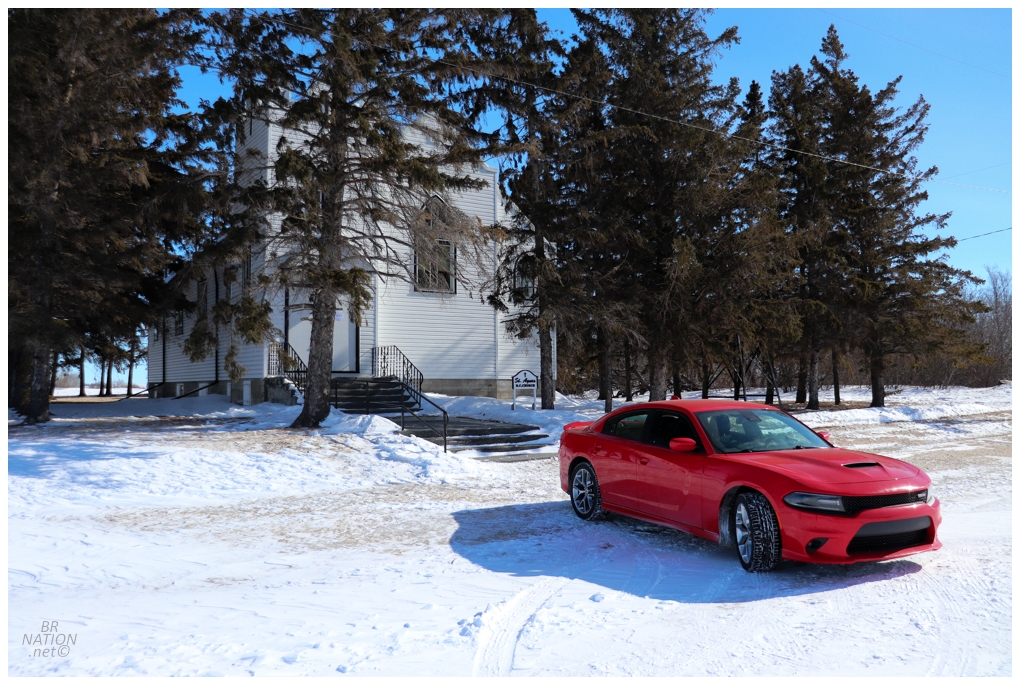
While Prince Albert is north of Saskatoon, I headed east to the village of Peterson after I found it listed on some ghost town hunter's website. On the ground there wasn't much that made Peterson feel like a ghost town - only a couple of rundown grain elevators, a few houses that were mayyyybe abandoned, and a quiet baseball backstop. As it turns out, the church he photographed is now gone. I was left with the active church, which was locked up tight thanks to COVID. At least Peterson's church provided me somewhere to get a nice shot of my Charger, which reminds me, I said it was a Mustang in the first update of this road trip. Whoops! Same difference. |
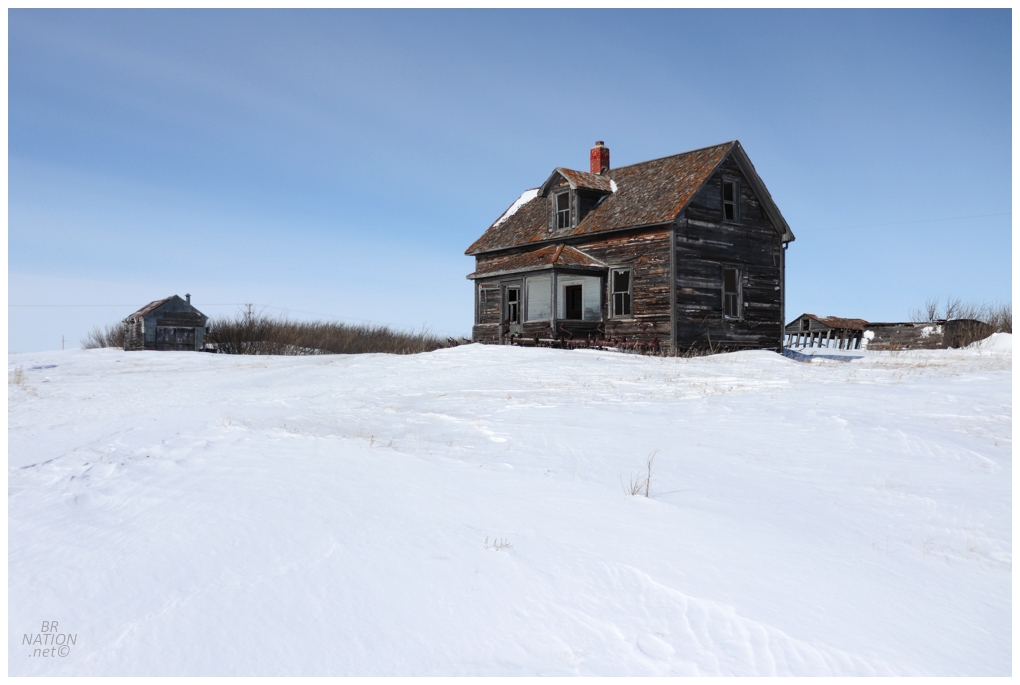
Veering off the beaten path to Peterson would also help put me on country roads, where I hoped there were more abandoned homes than the traditional SK-11 highway from Saskatoon to Prince Albert. Nearing the village of Prud'Homme with a hill up ahead, I casually let off the gas and pulled over at the end of the driveway for this old farmhouse. Now this was what I was talking about when I booked a flight to Saskatchewan! |
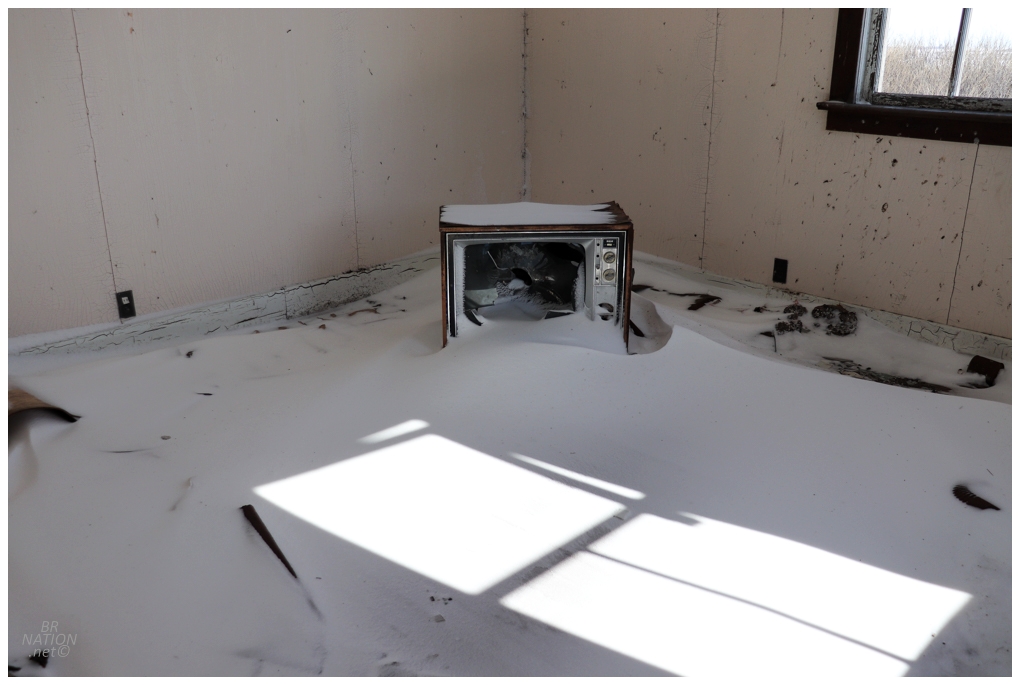
I was surprised by how little graffiti I found inside, but looking at the house in Google Maps, I see that in the summertime it would look a lot more like it's off in some farmer's field. I could see people thinking it's less approachable in July than here in March. |
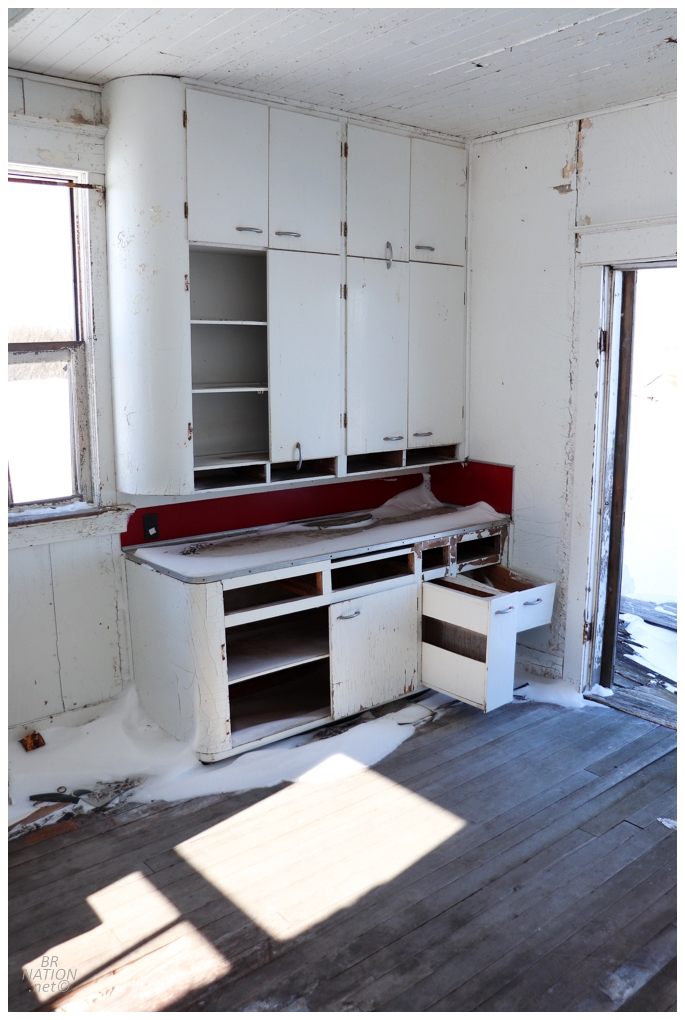
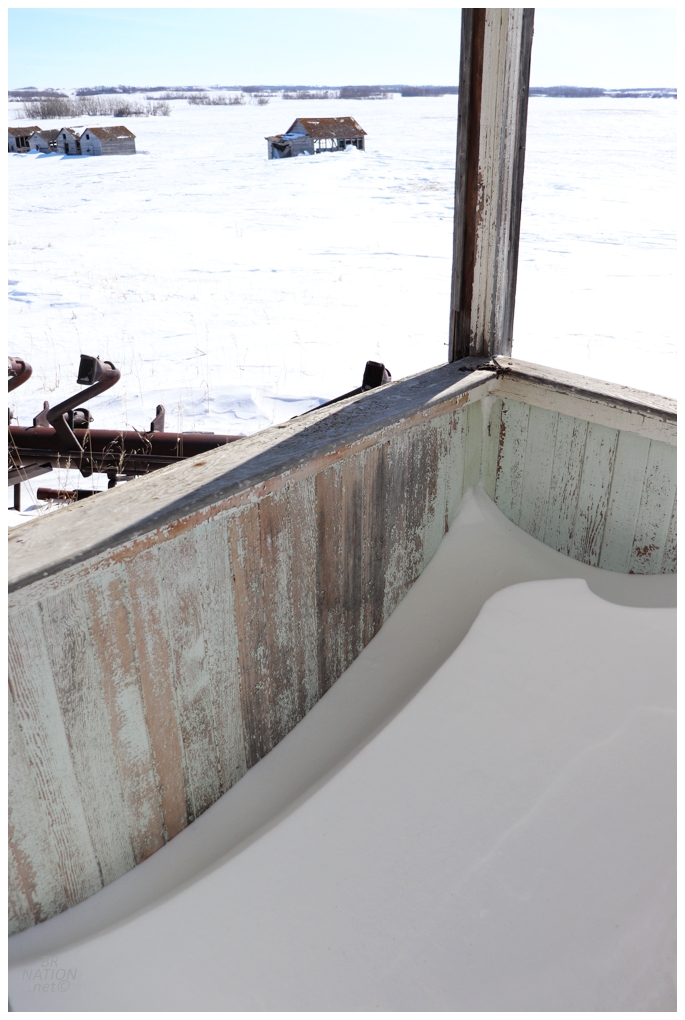
There were a collection of sheds and outbuildings, but my feet were barking with the snow and ice I'd collected while breaking through the calf-deep snow on the walk in. This is after already taking my shoes off once inside the house to try and brush off as much snow as possible. |
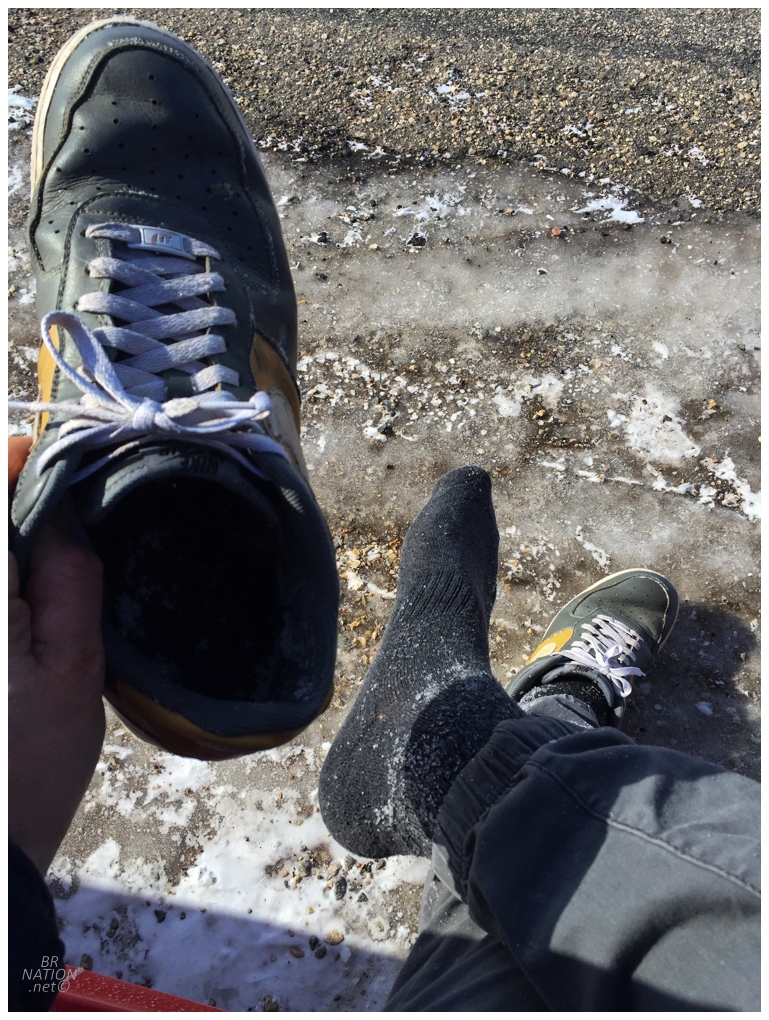
Of course I had to do the same thing when I returned to the car. This was going to become a problem as the snow melted with the car's foot heater and how I couldn't burn through my whole vacation sock allotment today. |
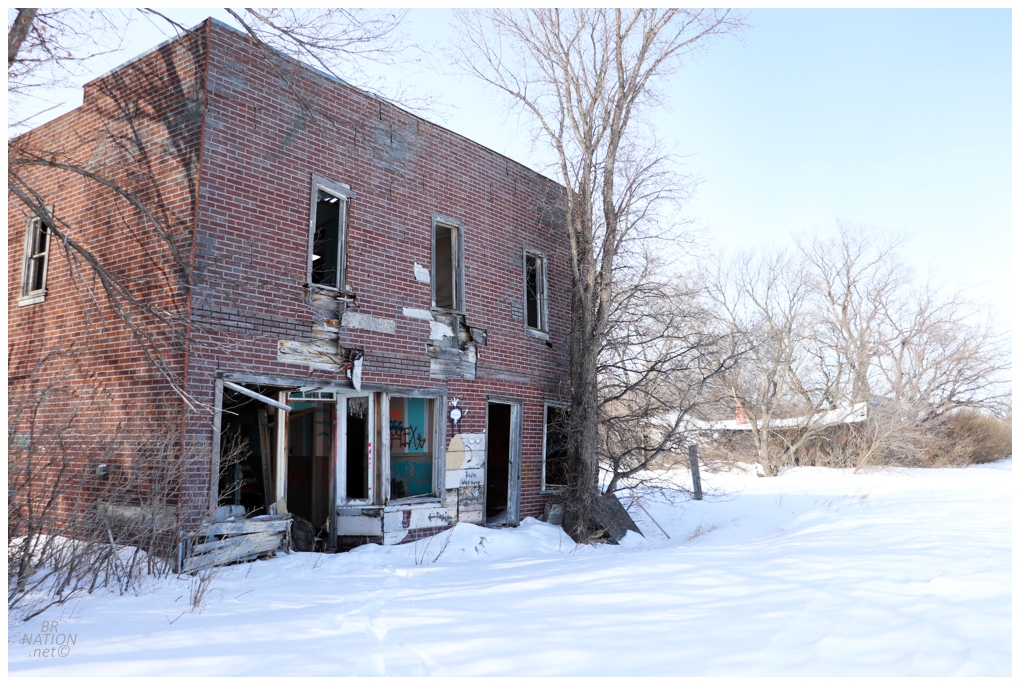
The old hotel, Smuts, Saskatchewan
While that fantastic farmhouse was found by chance, the next stop was a planned one - the tiny hamlet of Smuts, Saskatchewan! Yes, you read that right, Smuts! Smuts was an interesting and unique ghost town in that it was a full ghost town along its main road, while the connecting county road was the only part of Smuts that hangs on with one occupied house and a well-maintained church. It was as if Notre Dame Street was totally abandoned, while the last remnants of Belle River only hung on along Belle River Road. |
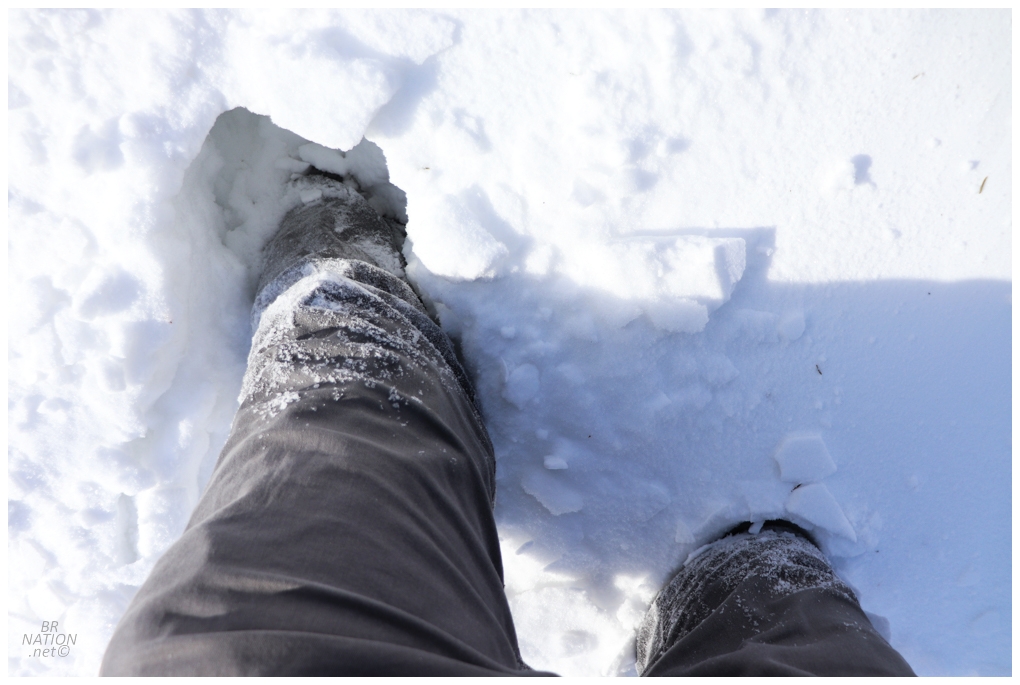
The snow was even deeper here in Smuts and I was actually getting sweaty as I tried to fight through the knee-deep pow in order to get into the buildings and brush myself off. I thought about how I'd kill for some snowshoes, but was I really regretting not bringing snowshoes on a vacation? Insanity! Give your head a shake Navi! |
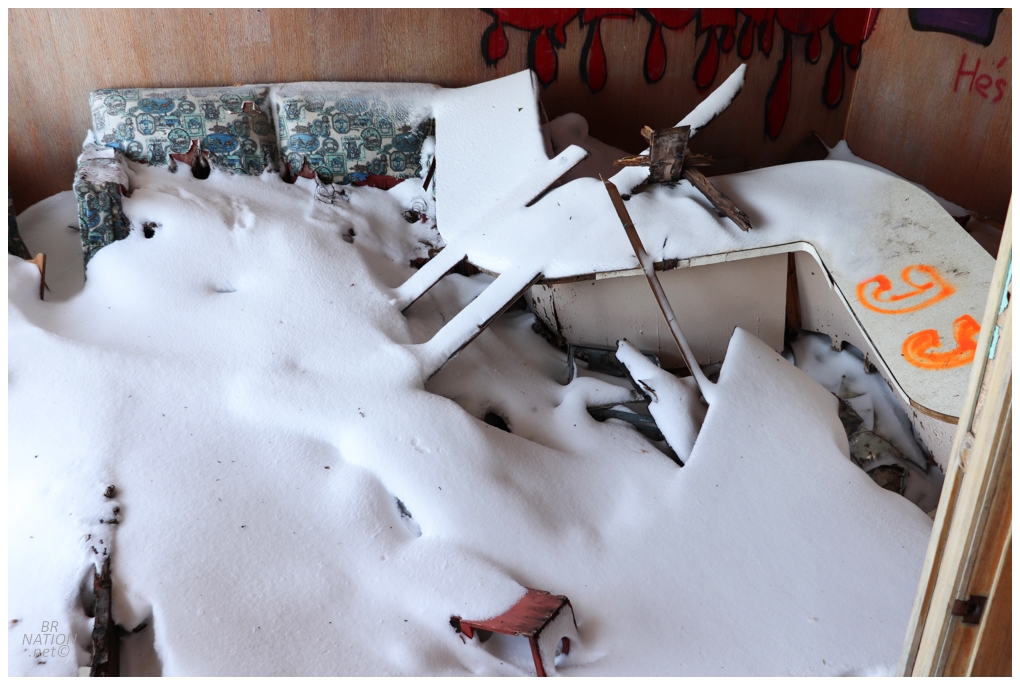
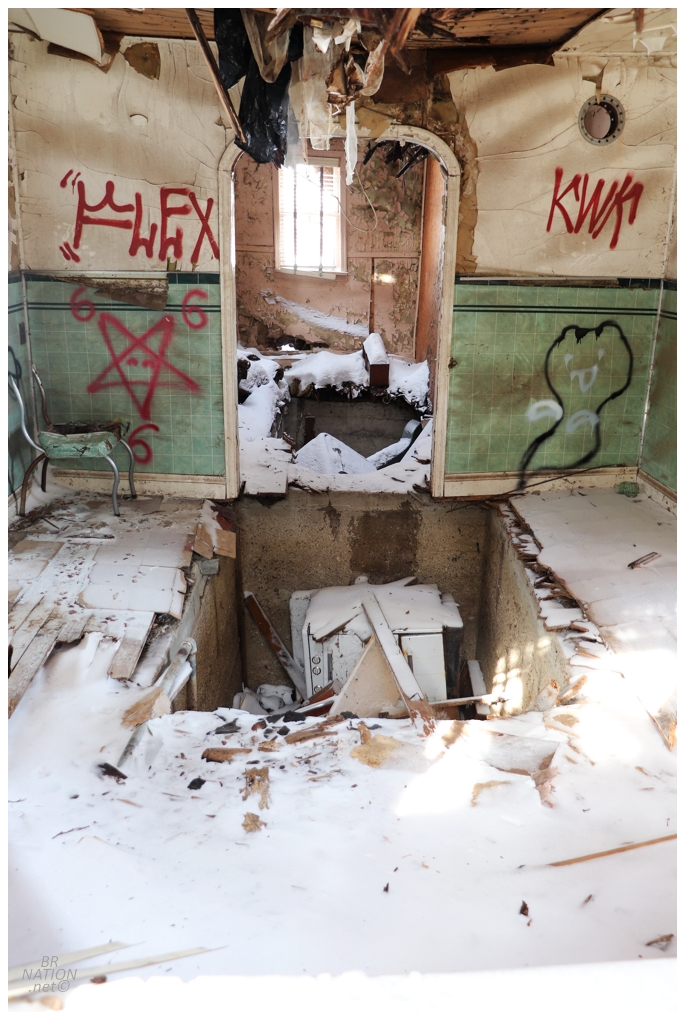
The buildings of Smuts were in rough shape and in their unmolested state, I didn't really want to wander around too much as I couldn't size up the floor under all this snow. |
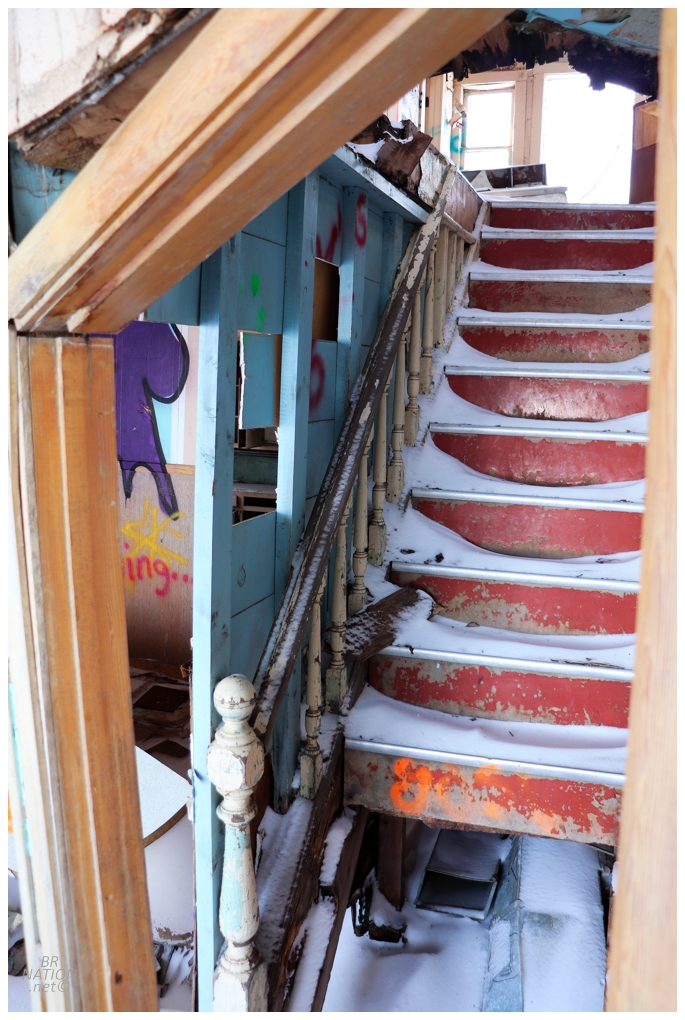
Snow that might be hiding holes down into the basement. Noticing that someone had written "Outer Banks" on one of the walls, I grew pretty excited. Thinking about how cool it was that some teenager from North Carolina had also found themselves in distant and remote Smuts, Saskatchewan. I kept that thought going until a month later, when I came downstairs to discover Isy watching the Netflix series Outer Banks. The internet is making everyone so similar and boring (I say this as a schmuck who "urbexes", lol.) |
As for Smuts history, the railway through here was abandoned with the construction of a highway a handful of kilometers away. This led to the Smuts grain elevators closing, along with smaller businesses tied into railway activities. The town was already dying at this point but this just accelerated things, with citizens leaving sooner, and more and more businesses, as well the school, closing soon after. Smuts most interesting history tidbit comes in being the birthplace of nonagenarian track and field star Olga Kotelko. Born in Smuts on March 2nd, 1919, Olga was the seventh of eleven children to Ukrainian immigrants Wasyl and Anna Shawaga. She worked on the family farm near Smuts and eventually taught at one or more of the one-room schoolhouses around Smuts and nearby Vonda. Moving to British Columbia and raising two daughters as a single mother after leaving her alcoholic and abusive husband in Smuts, Olga remained healthy and active to the point that she was still playing softball at the age of 75, when she made a remarkable double play that led to some light news coverage. Deciding at that point she needed to give up her position to someone younger, she then took up track and field at the age of 77. I'd say there must have been something in the borscht and pierogies around Smuts, except that Olga outlived all ten of her siblings and all of their spouses. |
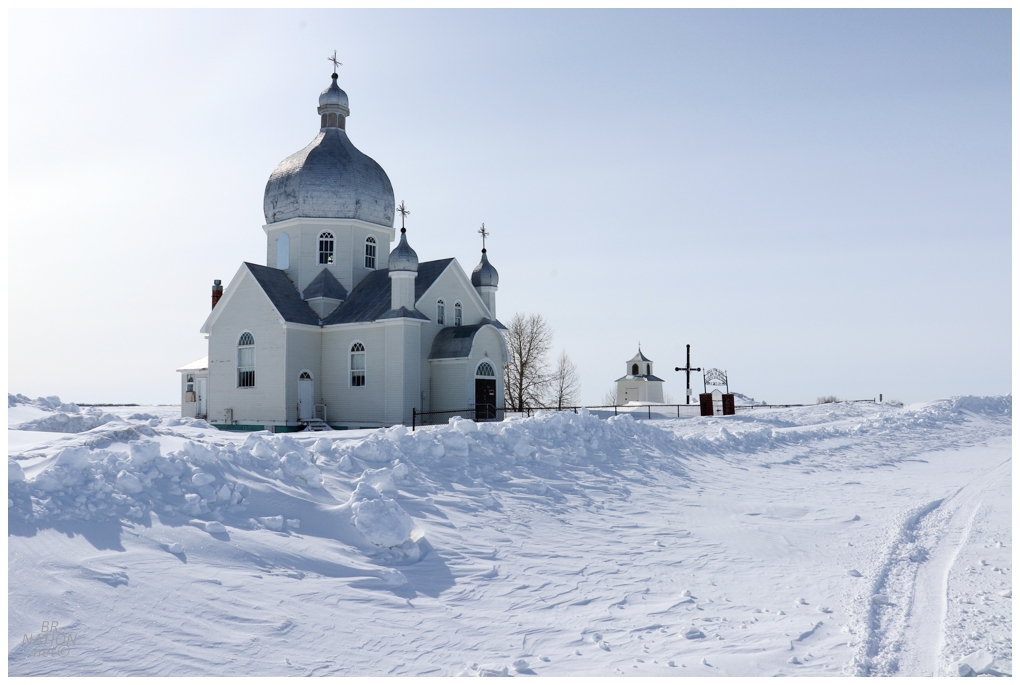
St. John The Baptist Ukrainian Catholic Church, Smuts, SK.
Olga didn't just take up track and field, she broke or set 37 age-specific world records for everything from 100m (23.95 secs) to discus to hammer throw (18.5 feet) to high jump, all between 1996 and 2014. She was the cover story of a 2010 New York Times. She carried the torch in the 2010 Vancouver Olympics. Scientists from McGill studied her and were confused that her muscles weren't decaying like all of our muscles will decay after age 65. In her 2014 biography, Olga: The O.K. Way to a Healthy, Happy Life, Olga states, "I never imagine when growing up on the family farm in Smuts, Saskatchewan that I would be doing what I am doing today. The road from the family farm to world class athletics was a long and arduous one, and it seems that I had begun to challenge gravity even as an infant." (Olga fell out of the sleigh at six weeks old on the way to her baptism at the St. John The Baptist Church. Anyway, I apparently missed a pretty cool car in a collapsed shed and Olga's parents house also still stood somewhere out in all this cold; but with knee-deep snow, I had enough of frost biting at my feet and made a bee-line back to the car. |
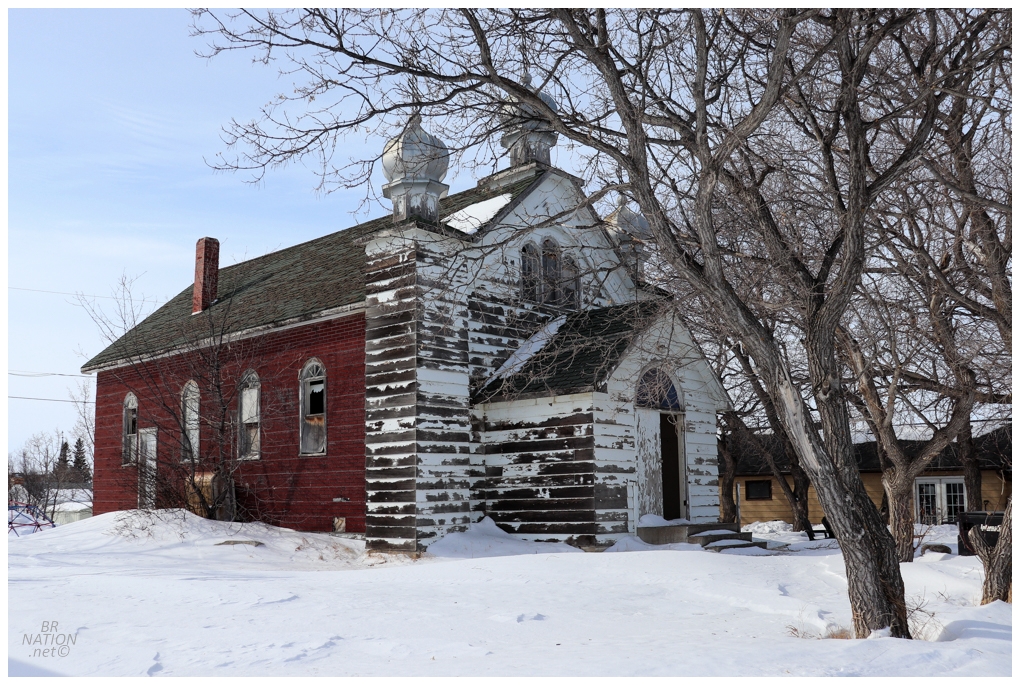
Things were going well at this point, except that I was finding a lot of these country roads and highways bypassed many of the Saskatchewan hamlets along the way. I felt like I was already nearing Prince Albert and had extra time though, so I pulled off at the sign for Alvena. Wouldn't you know it, there along the dirt road main street of the sleepy village of 70 souls, stood the St. Demetrius Ukrainian Catholic Church with its front door wide open. |
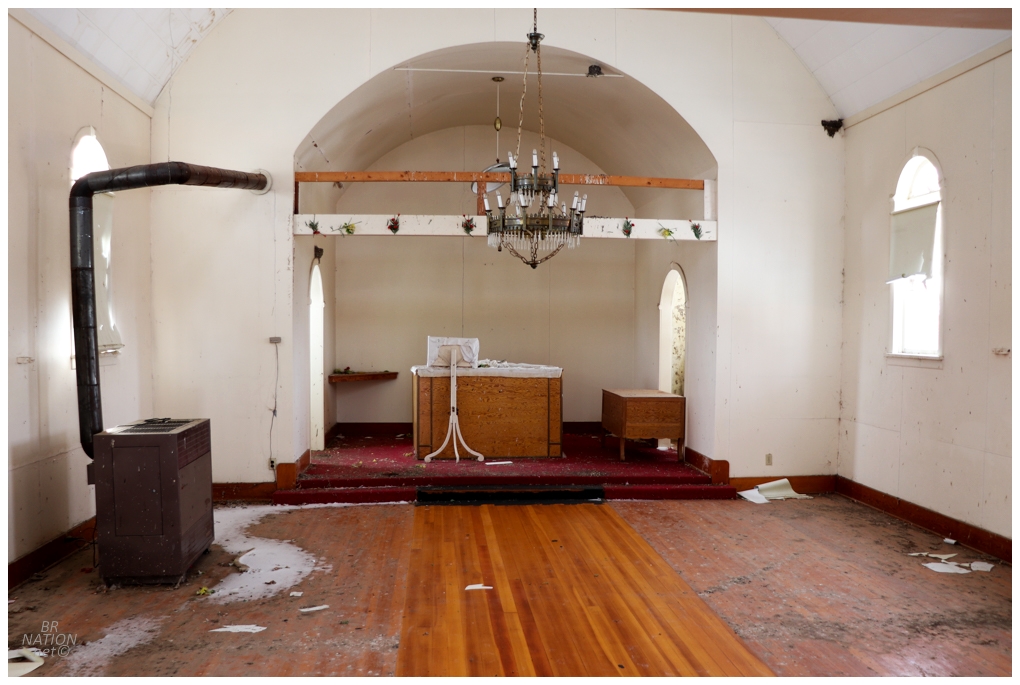
St. Demetrius was built in 1910 and closed in 1949 with the opening of a new church about ten kilometers (six miles) to the southwest of Alvena. For a church to close in 1949 and still stand in this type of shape, clearly someone was looking after it for decades. It's sad to see it now on the steady march to collapse. |
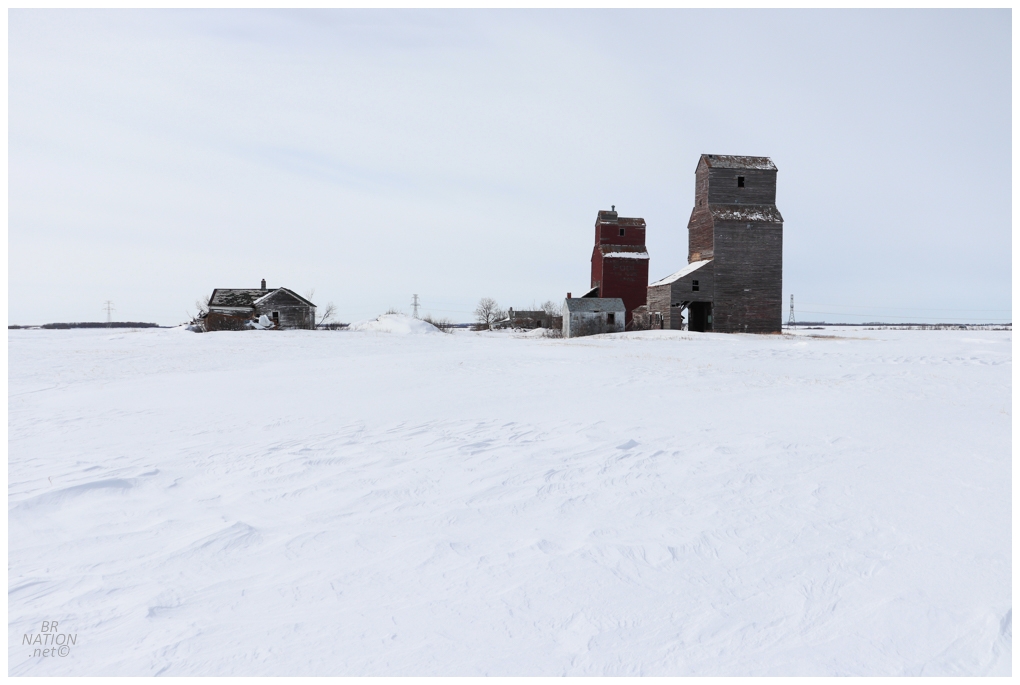
The last stop before Prince Albert came in the tiny siding of Lepine, where I was going to check off exploring a grain elevator in the Prairies from the todo list. Turning onto a sleepy secondary highway, I then sized up the country roads and the grip of my Dodge Charger all-seasons as I pulled further onto Rural Road 2255. Realizing that there wasn't a main road that would bring me any closer to the Lepine grain elevators, it's because there was never much here besides the two elevators and the farms which brought grain. The faint grassy lane that used to provide access to these elevators was discontinued a few years after the elevators themselves. The railway spur which connected Lepine with the nearby town of Wakaw was abandoned in 1980. Lepine wouldn't have much reason to exist since then, although two local farmers have taken possession of these grain elevators and hope to see them preserved. |
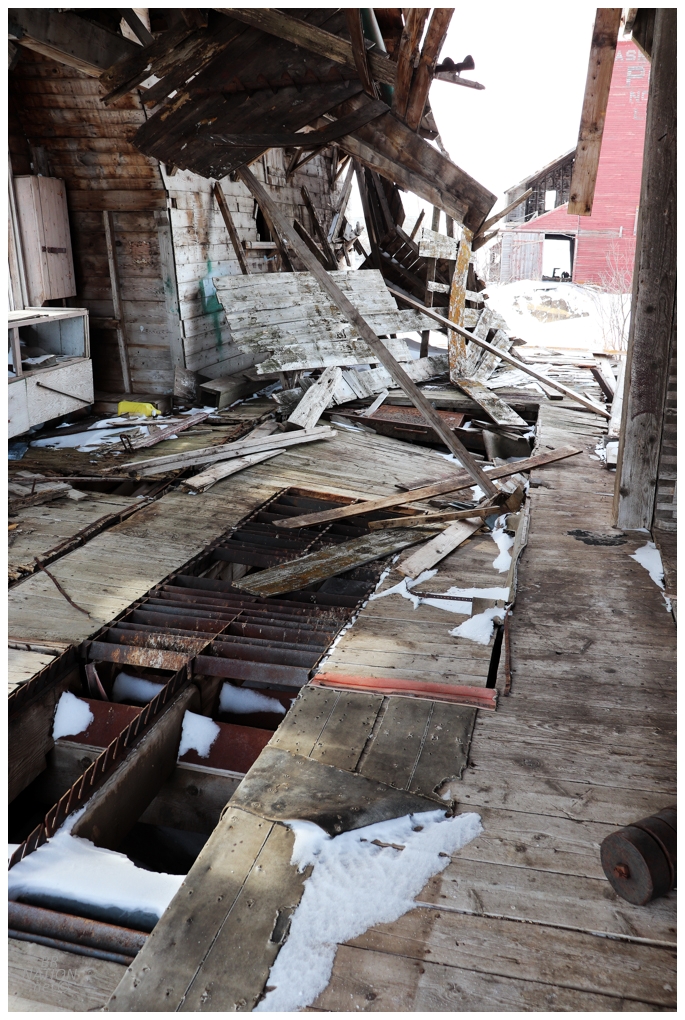
The snow here wasn't Smuts deep, but it was snow that has an icy layer atop. This led to my feet breaking through with only every other step, which obviously still covered my pants, socks and shoes with snow. Having spent the money and time to head out here for hockey and abandoned buildings, I made up my mind that tomorrow I was going to purchase snowshoes in Prince Albert. Saving $70 wasn't worth this hindrance I was facing. |
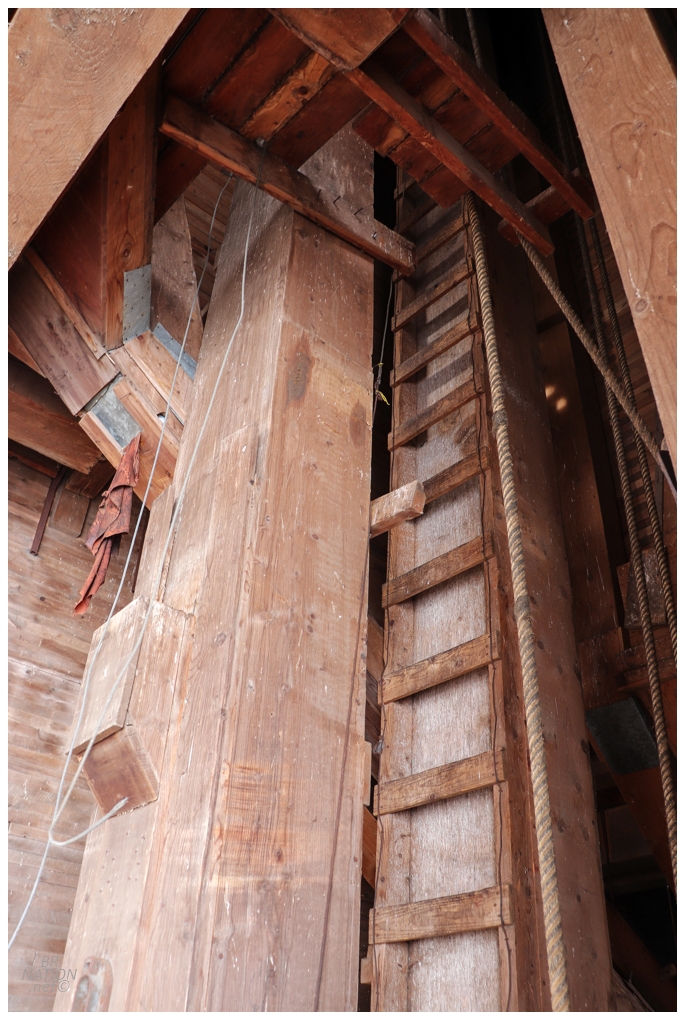
It was glorious to step off the snow and onto the wood boards of the grain elevator bottom floor, but then I noticed the ladder upwards. This wasn't like the grain elevator I climbed in Idaho which had levels and prevented you from falling very far if one of the rungs gave way - here in Lepine it was just one solo ladder leading up into the sky. F it, I'm here and this ladder needs to be climbed. One hand before the other. |
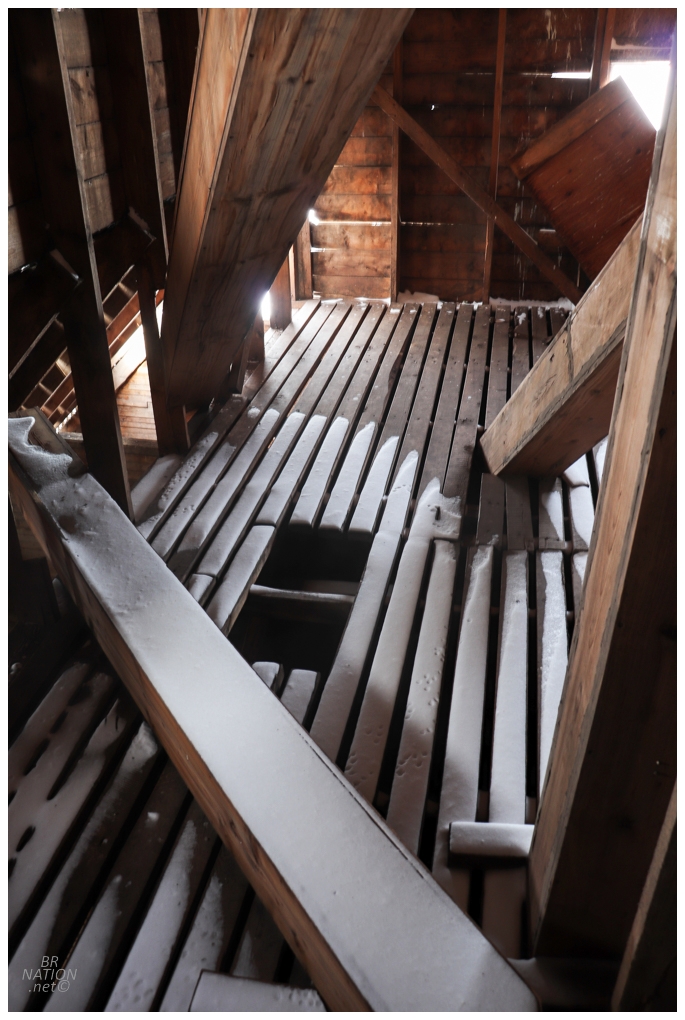
Of course the floor up here would be thin slats and of course it would be snow covered. Perfect for calm walking about! I tried to comfort myself by thinking about how many people must climb up here, but then again, there really wasn't much graffiti. Hmmm. |
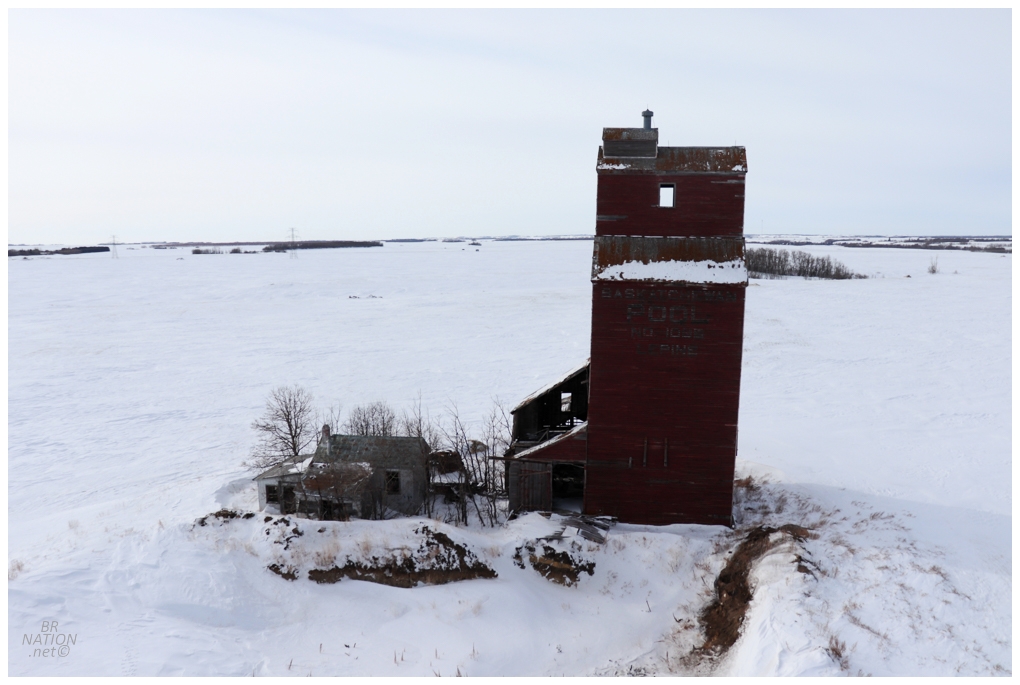
Sticking my head out of a gap in the roof, there was the Saskatchewan Wheat Pool Elevator and all of the glorious surrounding landscape. |
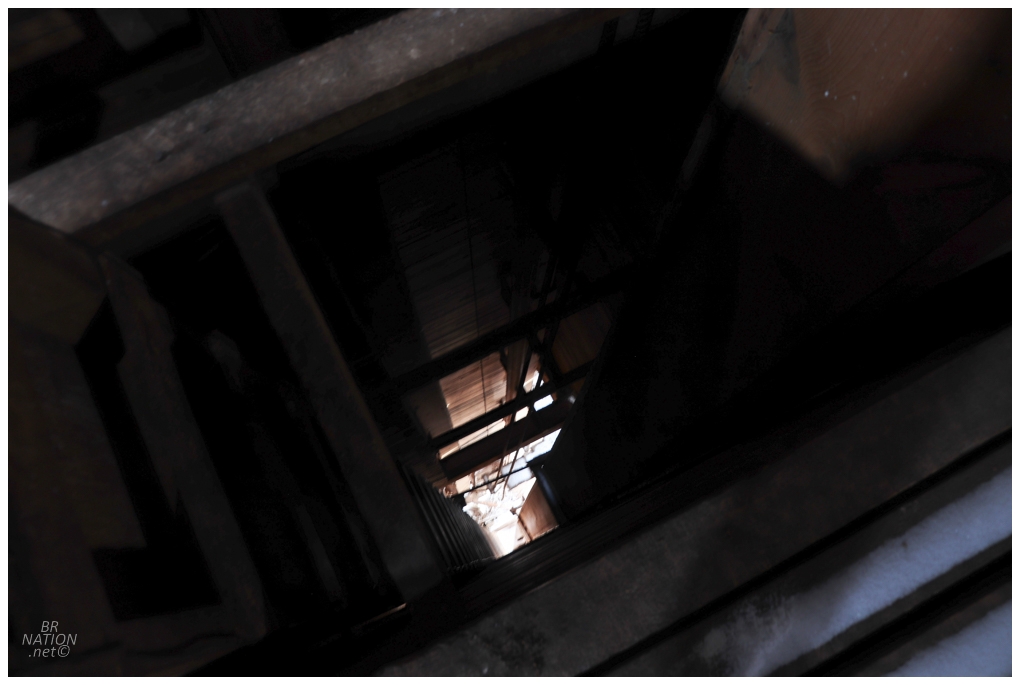
Okay though, time to return to terra firma. |
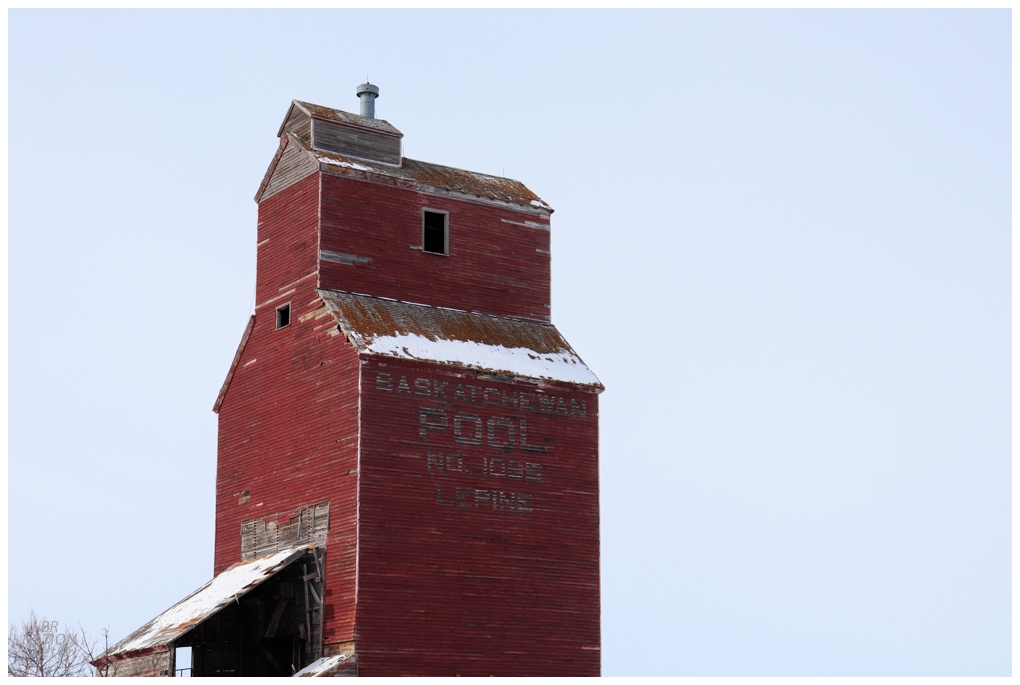
And time to get moving to Prince Albert. |